
The ultimate guide to large conference tables: seating 20+ people in style
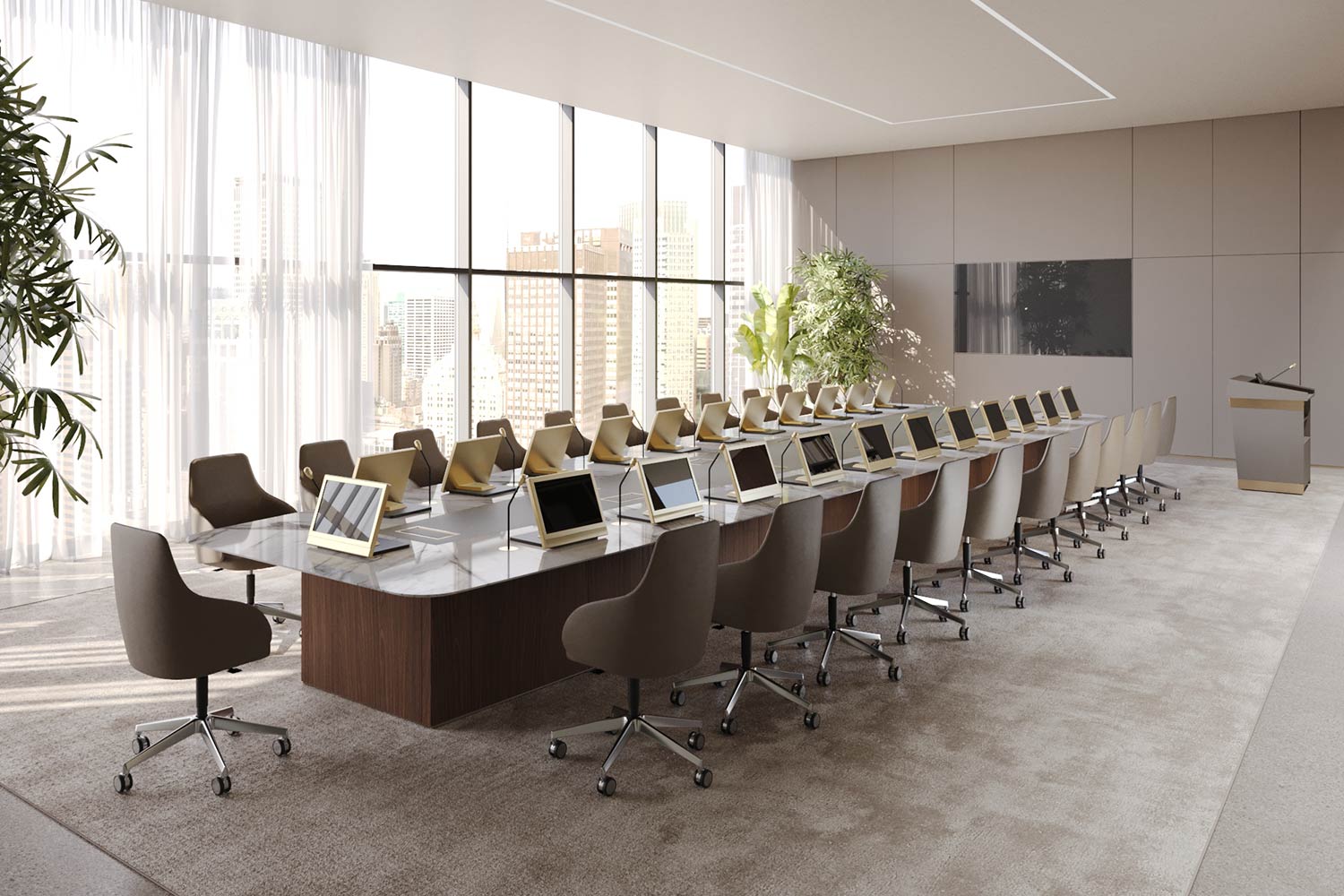
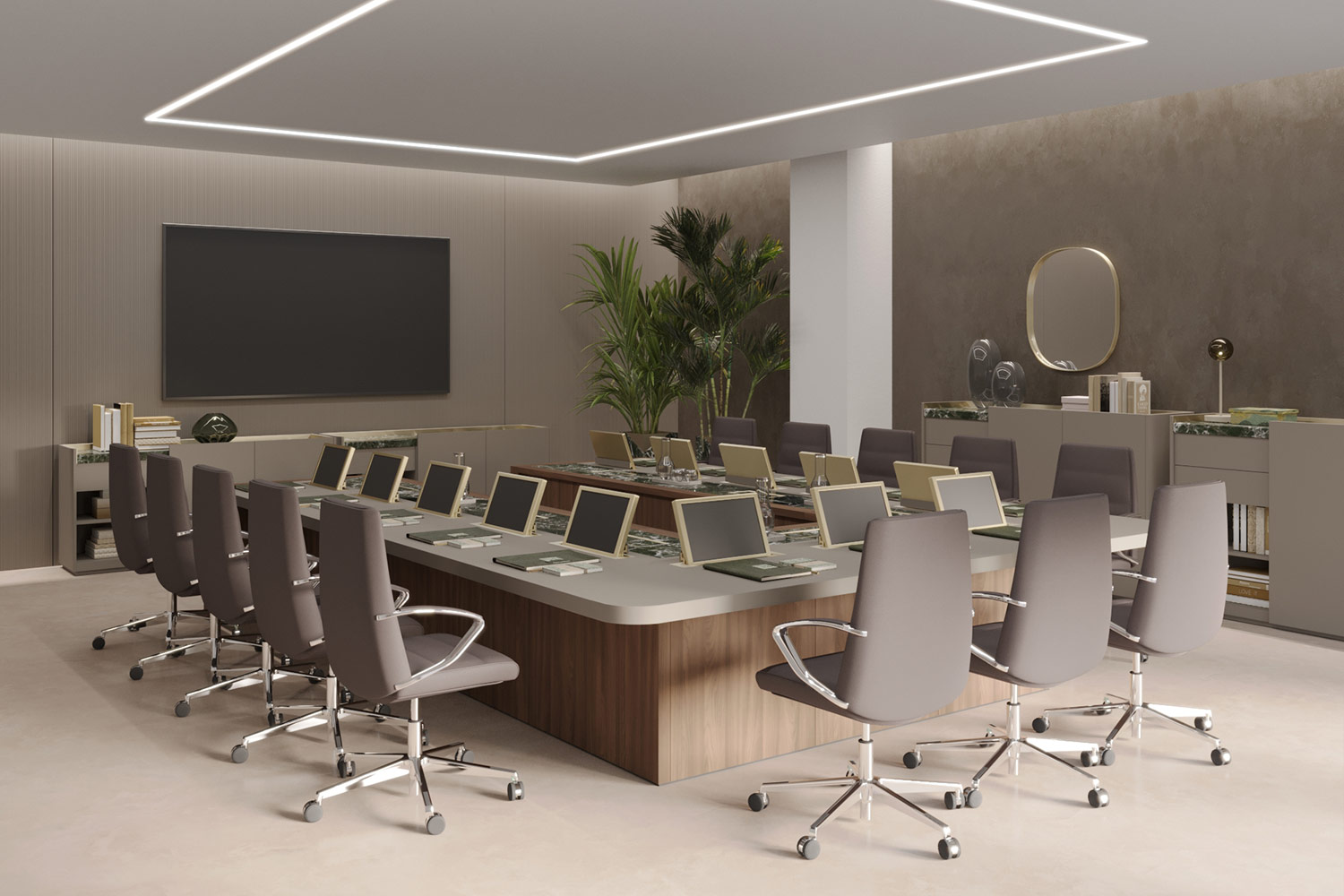
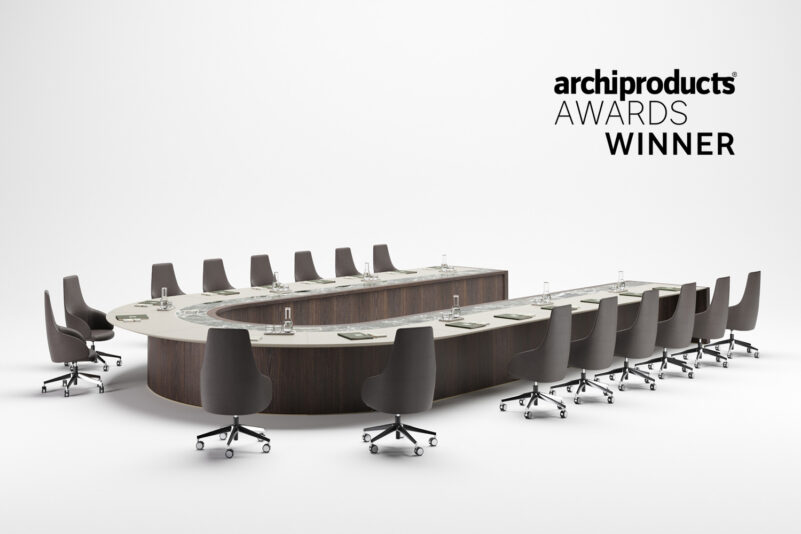
A large conference table is more than a furnishing choice, it shapes how executive spaces function, communicate, and represent an organization. In headquarters, boardrooms, and corporate meeting environments, accommodating twenty or more participants require careful planning that balances architectural presence, ergonomics, and technology integration.
From proportions to material selection, every design decision influences collaboration, circulation, and the overall perception of space. Whether specifying a 20-person conference table for a corporate headquarters or developing a fully custom boardroom environment, the objective remains the same: creating a workspace where functionality and executive identity coexist.
Mastering scale: the architectural impact of oversized meeting systems
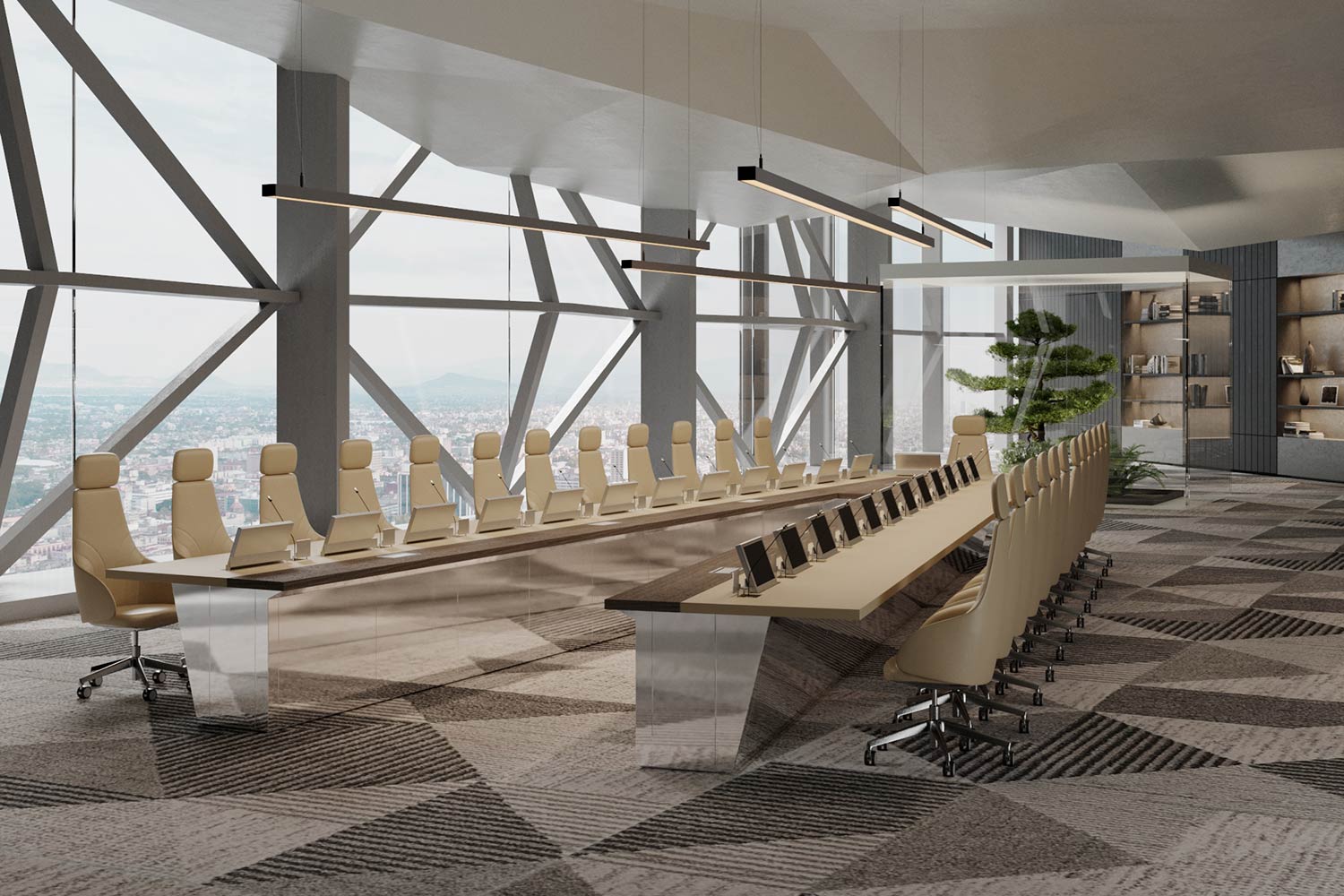
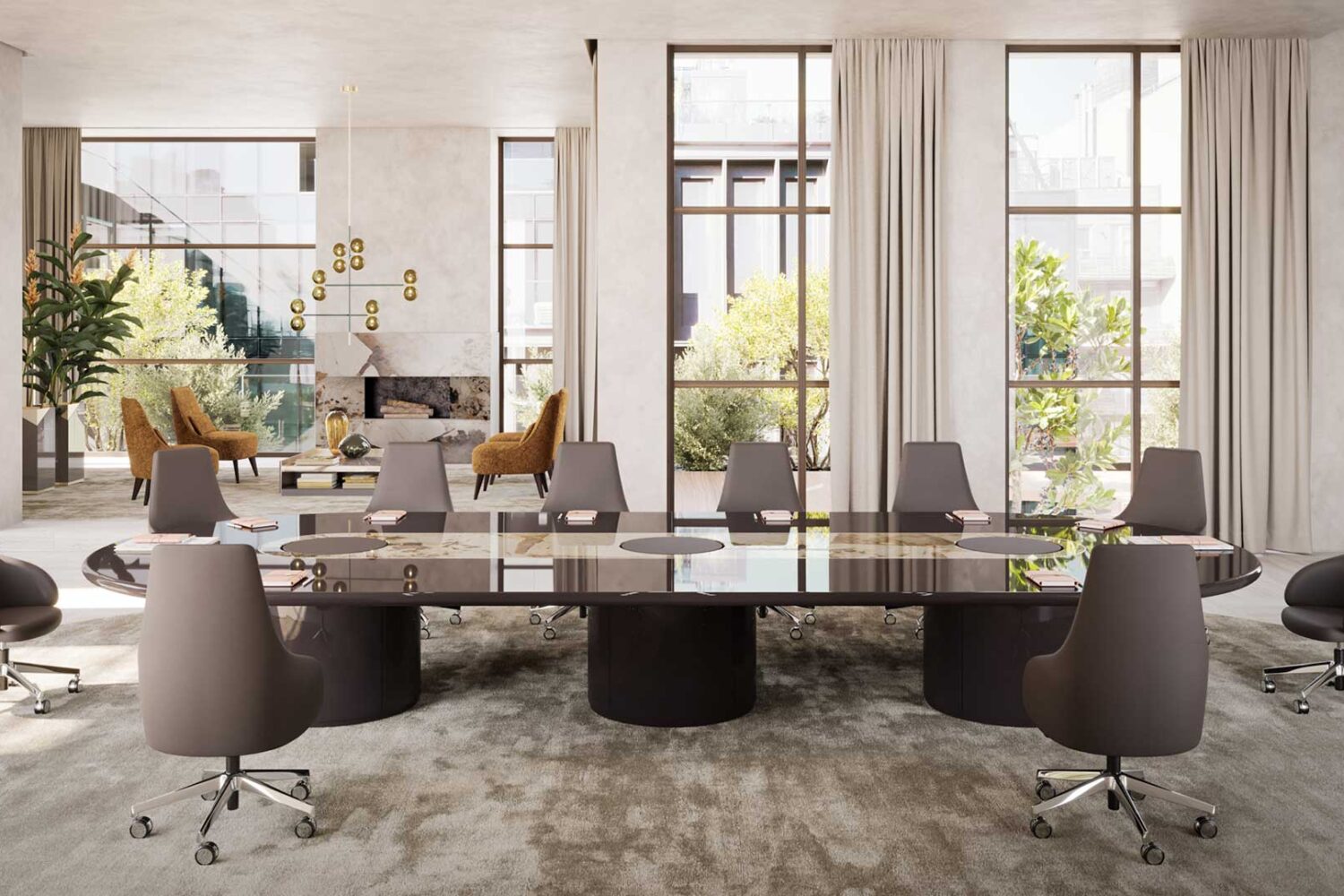
An oversized boardroom table becomes the defining element of the room. Its dimensions establish visual hierarchy, organize circulation, and create a clear focal point for executive discussions.
Designing for larger groups requires careful consideration of seating distances, sightlines, accessibility, and user comfort. When these elements are properly balanced, every participant benefits from equal visibility, comfortable interaction, and an environment that naturally supports productive conversations.
The proportions of the table also contribute to the architectural language of space, reinforcing a sense of order, continuity, and corporate identity.
Modular engineering: creating continuous surfaces without compromising stability
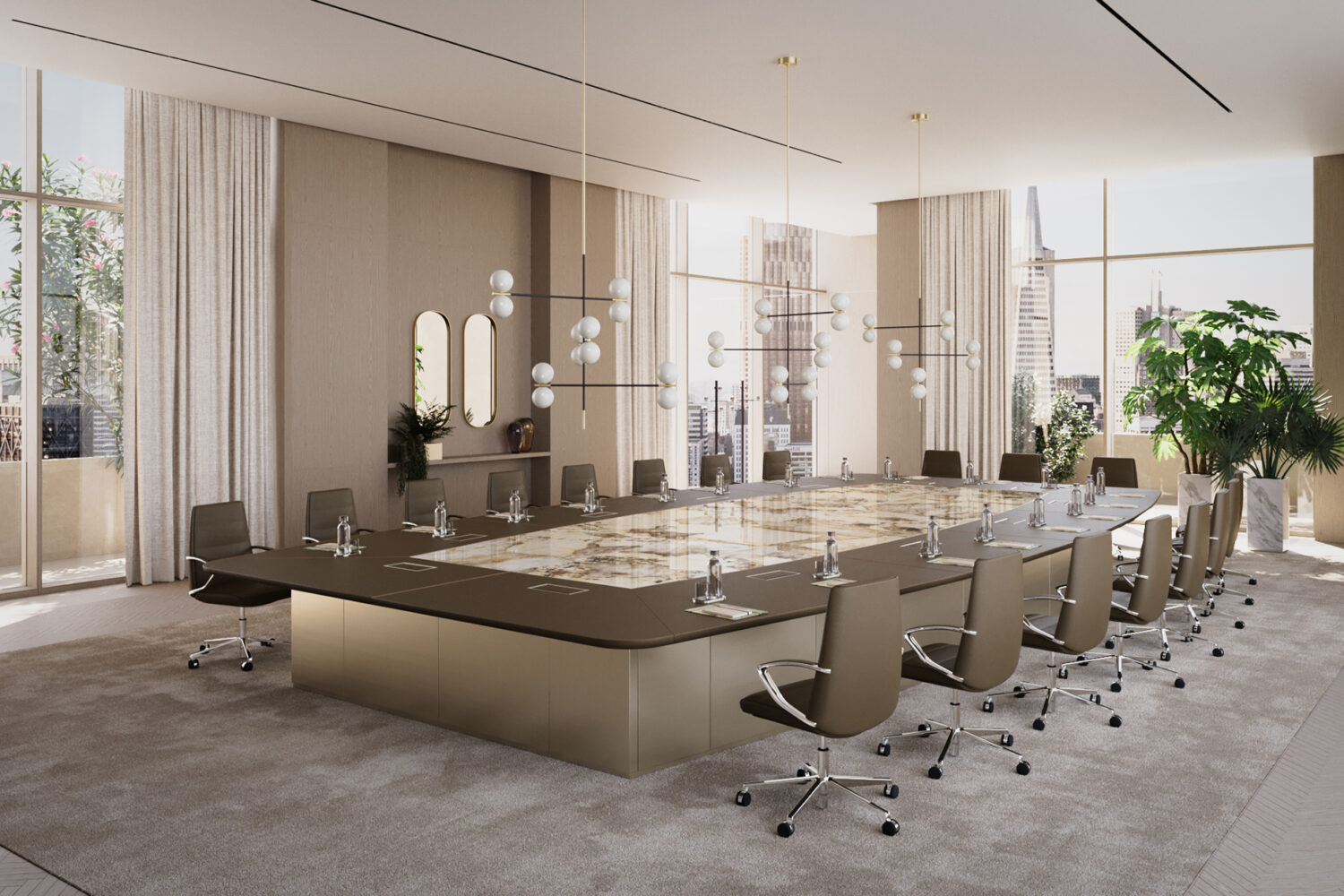
As conference tables increase in length, engineering becomes as important as aesthetics. A modular conference table allows designers to achieve substantial dimensions, while maintaining structural integrity and visual continuity.
Precision manufacturing ensures seamless connections between modules, creating the perception of a single uninterrupted surface. Supporting structures are carefully engineered to carry premium materials such as natural stone, wood veneers, or leather, while preserving a refined appearance.
Power access, data connectivity, and video conferencing systems can be fully integrated within the table, keeping technology readily available without disrupting the clean architectural design.
Collaborative grandeur: facilitating large-scale interactions in representative spaces
Successful boardrooms are designed around interaction, rather than capacity alone. Table geometry, seating distribution, and circulation all influence how people communicate, collaborate, and make decisions.
A comprehensive boardroom seating guide begins with understanding the client’s operational needs. Executive meetings, board presentations, international negotiations, and strategic workshops each require different configurations to maximize efficiency and user comfort.
The result is a conference environment that supports collaboration, while reinforcing the company’s professional image.
Custom conference tables that reflect corporate identity
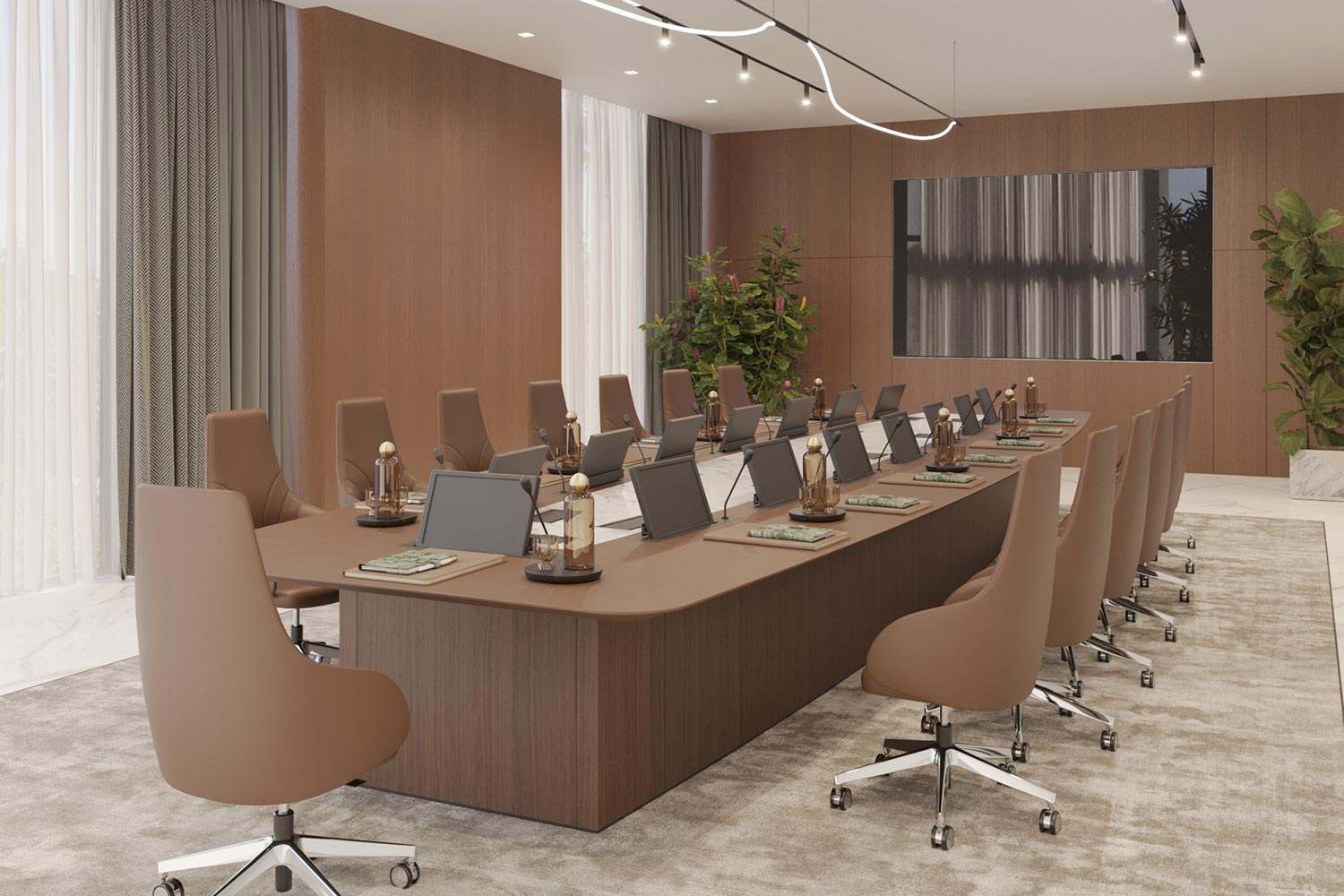
In contemporary executive interiors, the conference table often defines the character of the entire room. Dimensions, finishes, and construction details communicate the company’s values through thoughtful design and lasting material quality.
A fully custom solution allows architects and designers to tailor size, materials, integrated technology, and finishes with the surrounding architecture, ensuring that every conference room reflects a consistent luxury and high-end corporate identity.
Contact our Project Team for a custom consultation or download the general catalogue.
Related products
Related news
Versatile meeting table options for any office
For a space that meets every requirement.
Meeting table size guide: how to choose the right one
Around a well-designed table, ideas, relationships, and the future are built.
Choosing the right boardroom table for your office
Key factors that make the difference