
Small luxury office design: creating impact in limited space
In high-density urban environments, small luxury office design addresses a precise challenge: delivering corporate identity, efficiency, and spatial clarity within restricted square footage. From NYC office design contexts to compact executive suites, the focus shifts toward performance-driven layouts, where every element contributes to both function, and brand positioning.
Designing prestige in contained volumes: the challenge of compact luxury
Limited space requires a strategic redistribution of functions rather than reduction. In compact executive office environments, hierarchy is expressed through layout intelligence and material consistency. Circulation paths are minimized, while visual order becomes essential to maintain authority and clarity.
In NYC office design scenarios, this translates into environments where privacy, representation, and operational efficiency coexist without spatial excess. The result is a workspace that communicates leadersh, through precision rather than scale.
Proportioned furnishings: collections that maximize space without sacrificing style
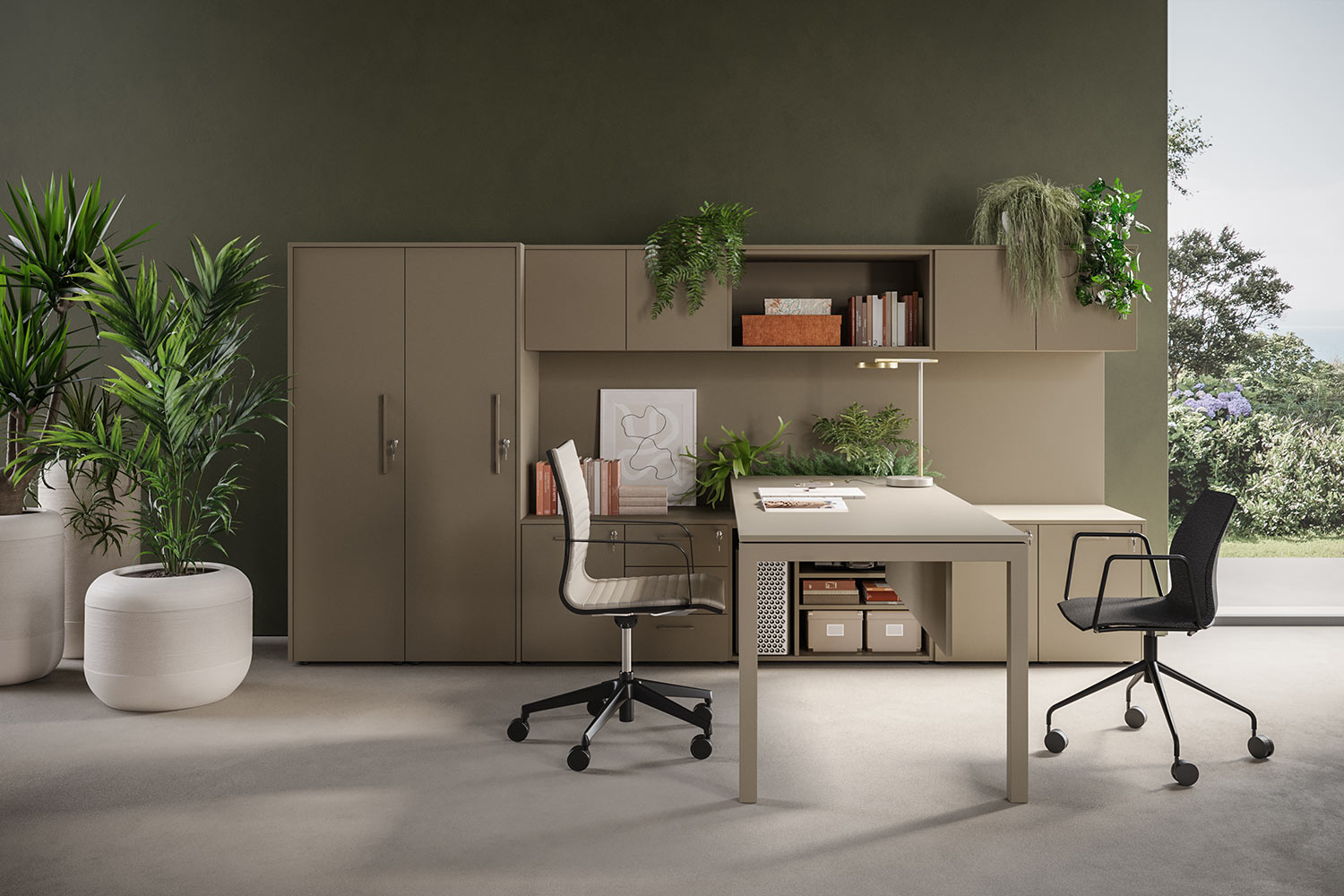
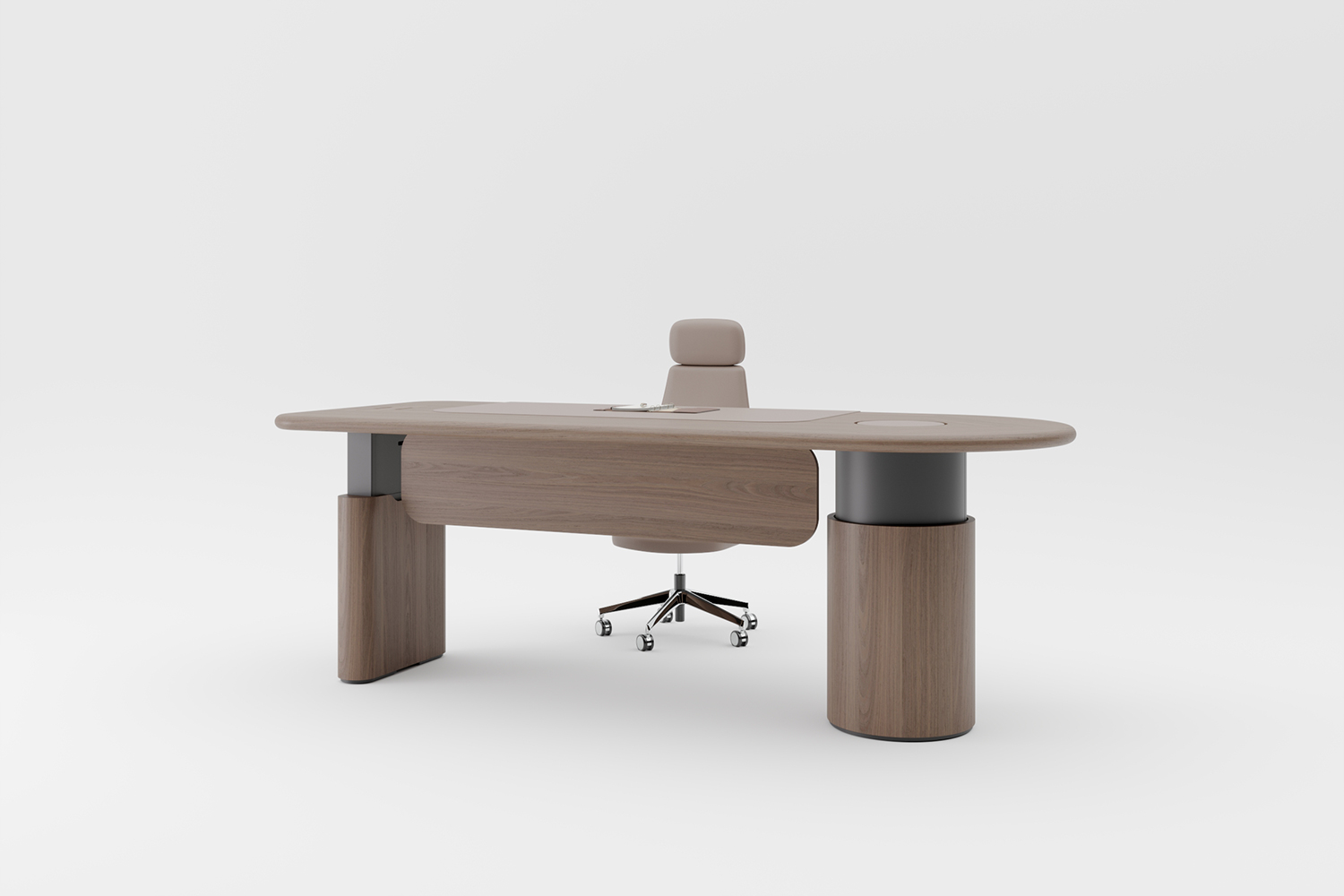
Furniture selection is central to achieving balance in small environments. Executive desk systems with reduced depth, integrated storage, and Custom configurations allow for full functionality within limited footprints. Wall-mounted cabinetry and vertical storage units free up floor area, while maintaining organizational capacity.
High end small office furniture prioritizes clean geometries, controlled thicknesses, and integrated cable management, ensuring that technology remains invisible and orderly. Conference Table solutions for compact offices follow the same logic, offering scaled proportions without compromising presence or usability.
Light and transparencies: expanding the architectural perception of the small office
Perception becomes a primary design tool in small luxury office environments. Glass partitions, reflective finishes, and open sightlines contribute to visual expansion and spatial continuity. Transparency supports both natural light distribution and a sense of openness, critical in confined layouts.
Artificial lighting is fully integrated—within ceilings, walls, or furniture systems—eliminating visual clutter. The combination of layered lighting and transparent materials enhances depth, making the office feel larger and more structured.
Ergonomics and integrated performance
Compact spaces demand higher ergonomic precision. Adjustable Executive Desk systems, advanced seating, and acoustic solutions ensure long-term usability and comfort. In environments, where functions are closely positioned, acoustic control becomes essential to preserve concentration and confidentiality.
Luxury home office ideas increasingly adopt these same principles, translating corporate standards into residential contexts through custom, high-performance solutions.
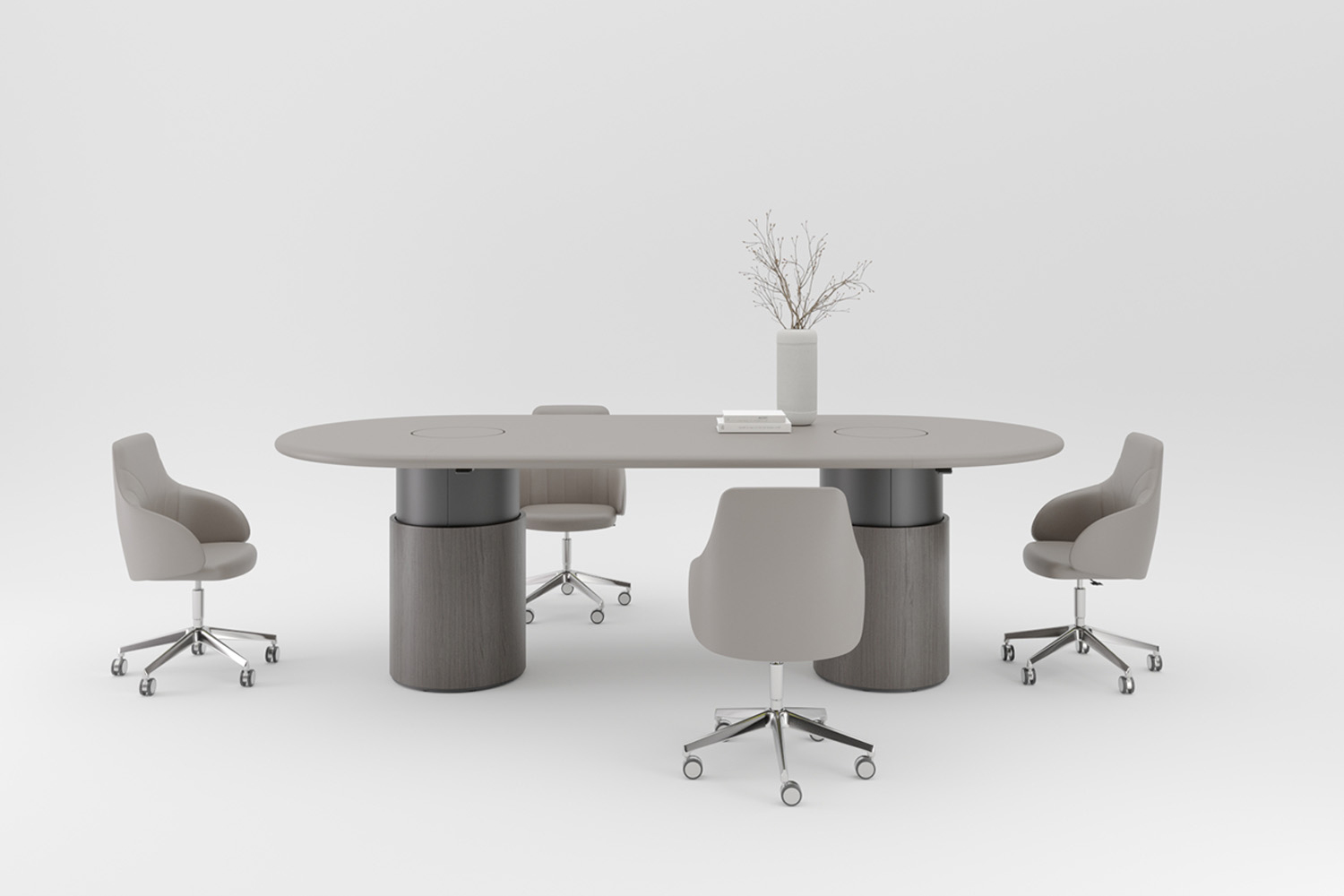
In small luxury offices, quality is defined by elimination. Every component must justify its presence through function or spatial contribution. The absence of excess allows materials, proportions, and detailing to define the environment with clarity.
This approach results in offices that are efficient, visually controlled, and aligned with high-end expectations—where space constraints become an opportunity for design precision.