
Designing office interiors for maximum productivity
Designing office interiors for maximum productivity
Best practices for designing office interiors that boost employee productivity
The contemporary office is more than just a collection of workstations; it’s an ecosystem designed to unlock human potential. In recent years, the correlation between the quality of interior design and human performance has become a competitive factor: a well-studied work environment reduces stress, fosters creative flow, and strengthens brand identity.
Designing office interiors that stimulate productivity means finding the balance between focus areas and community hubs, integrating well-being with technical functionality.
In this article, we analyze the best practices to transform office interiors into environments, capable of elevating the quality of work and relationships.
1. Balancing privacy and collaboration
One of the most common mistakes in contemporary planning is the tendency to provide excessively open spaces without quiet zones. Sharing workspaces promotes the exchange of ideas, but poor acoustic privacy is the chief obstacle to concentration. The solution lies in zoning, the strategic subdivision of the office through systems capable of adapting to every need.
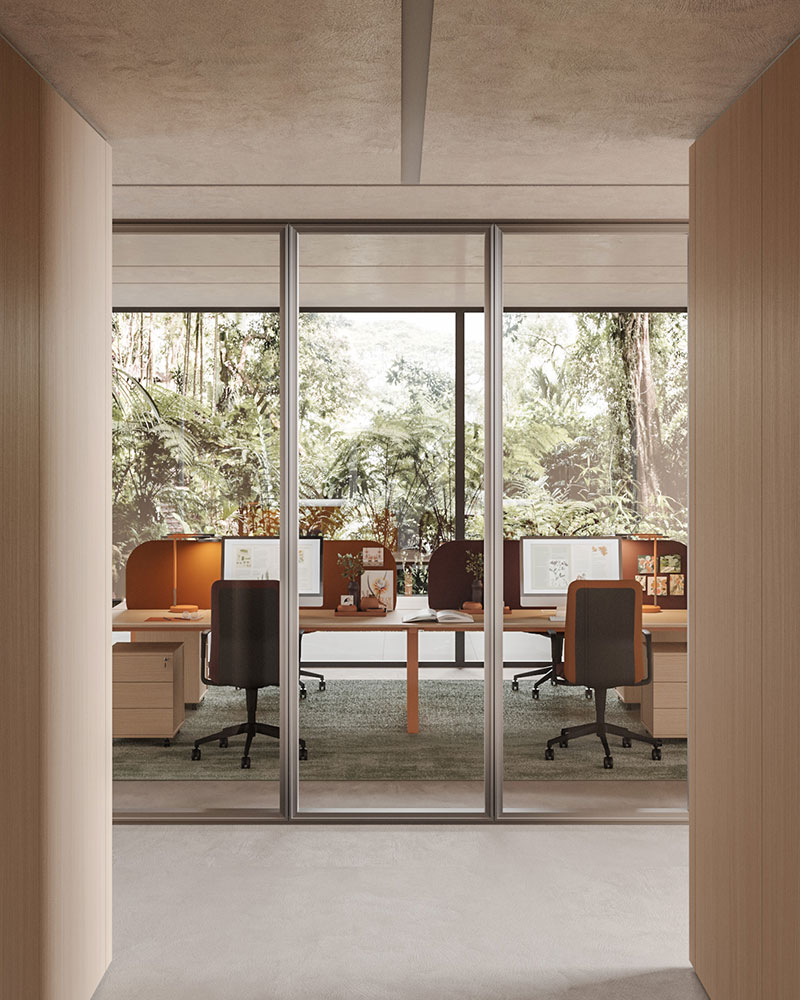
In this scenario, Profwall fits in perfectly—a partition wall system that combines simplicity of installation, acoustic comfort, and maximum expressive freedom.
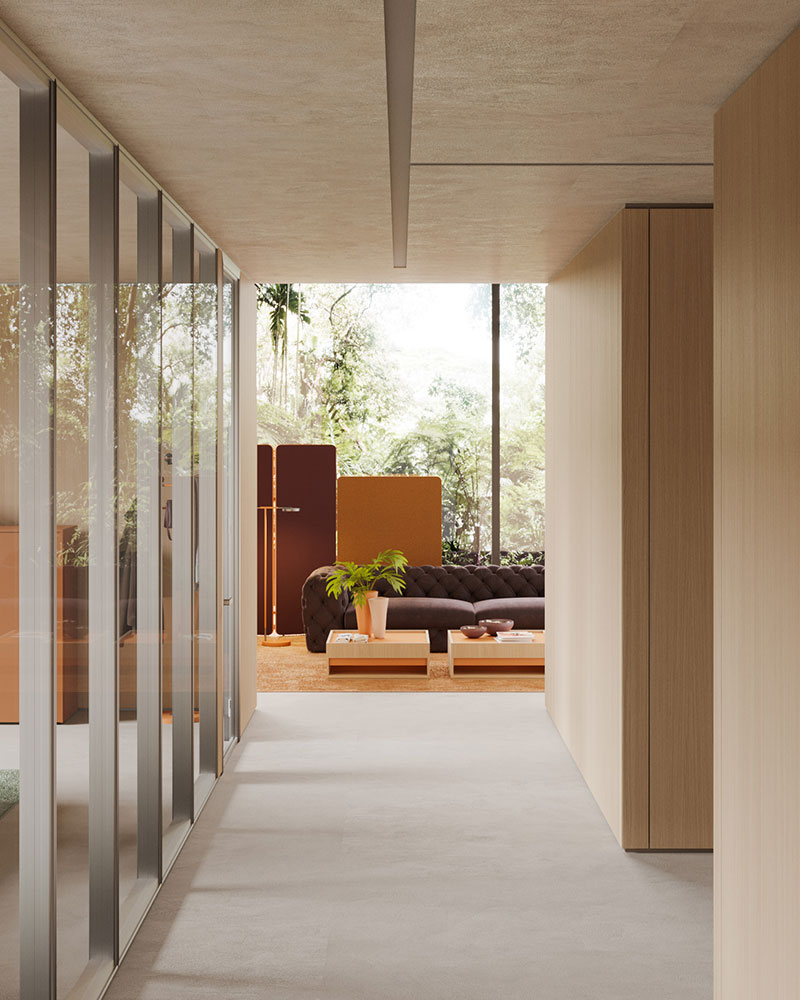
This solution provides the ability to modulate the space without structural changes, allowing for easy separation of operational areas from meeting rooms. Thanks to the use of glass and refined finishes such as wood or textured surfaces, Profwall transforms the need for privacy into a high-design element, maintaining the brightness and sense of spaciousness within the rooms.
2. Ergonomics and dynamic well-being
Productivity is closely connected to physical well-being. Working for hours in a static position reduces lucidity and energy, generating fatigue and a drop in attention. Therefore, the layout of office interiors must encourage natural and frequent movement.
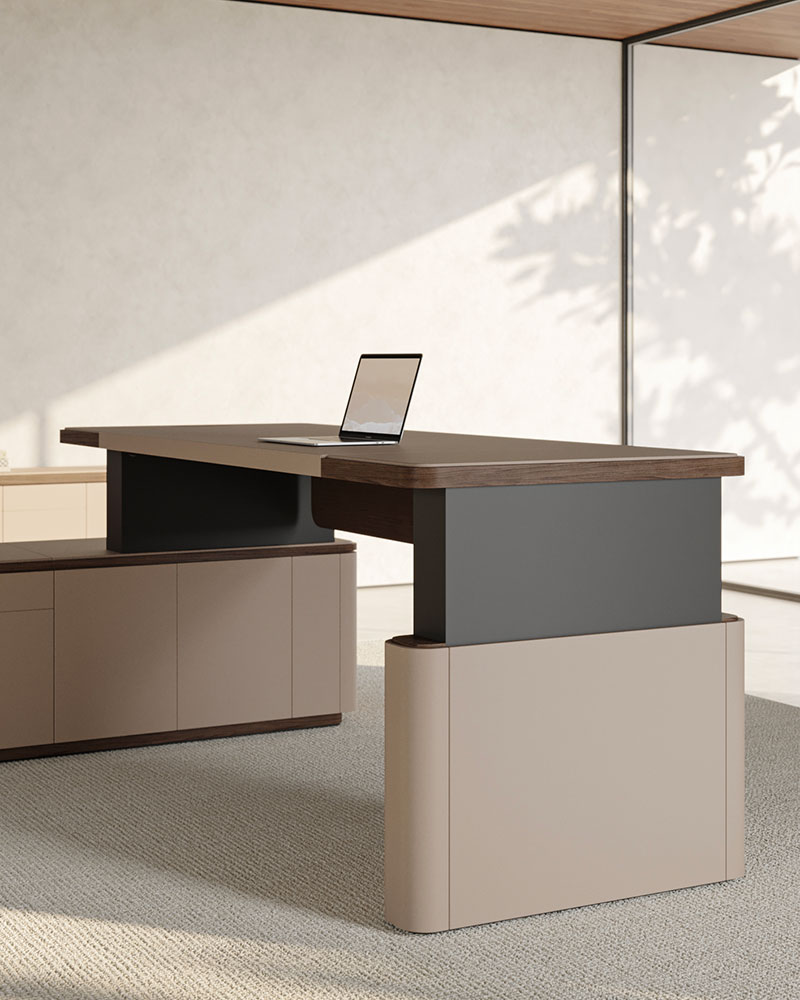
Adjustable desks represent one of the most significant changes in recent years. The ability to alternate between sitting and standing positions (the sit-stand approach) supports healthy posture, improves circulation, and sustains a higher level of concentration.
The Flow desk embraces this principle by transforming movement into a design value: the adjustable height allows the user to choose the most suitable posture for their needs, making the gesture an integral part of the work style. It is not just ergonomics, but a dynamic approach that accompanies the different rhythms of the day.
Discover the new FLOW desk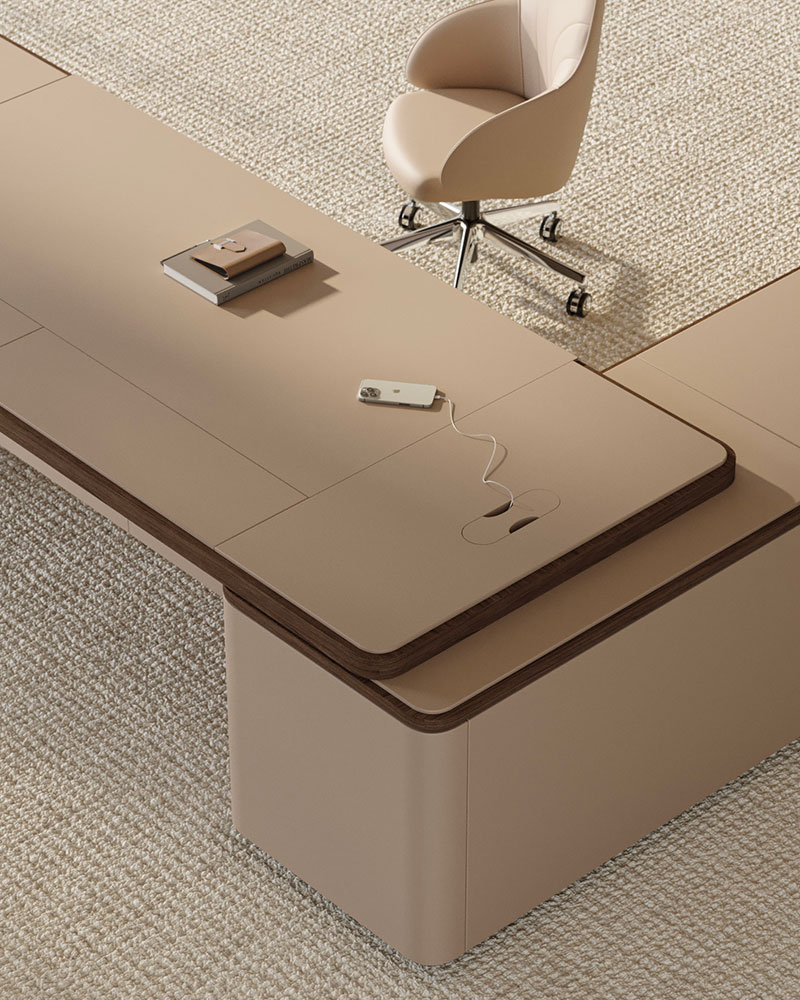
3. The psychology of color in the workplace
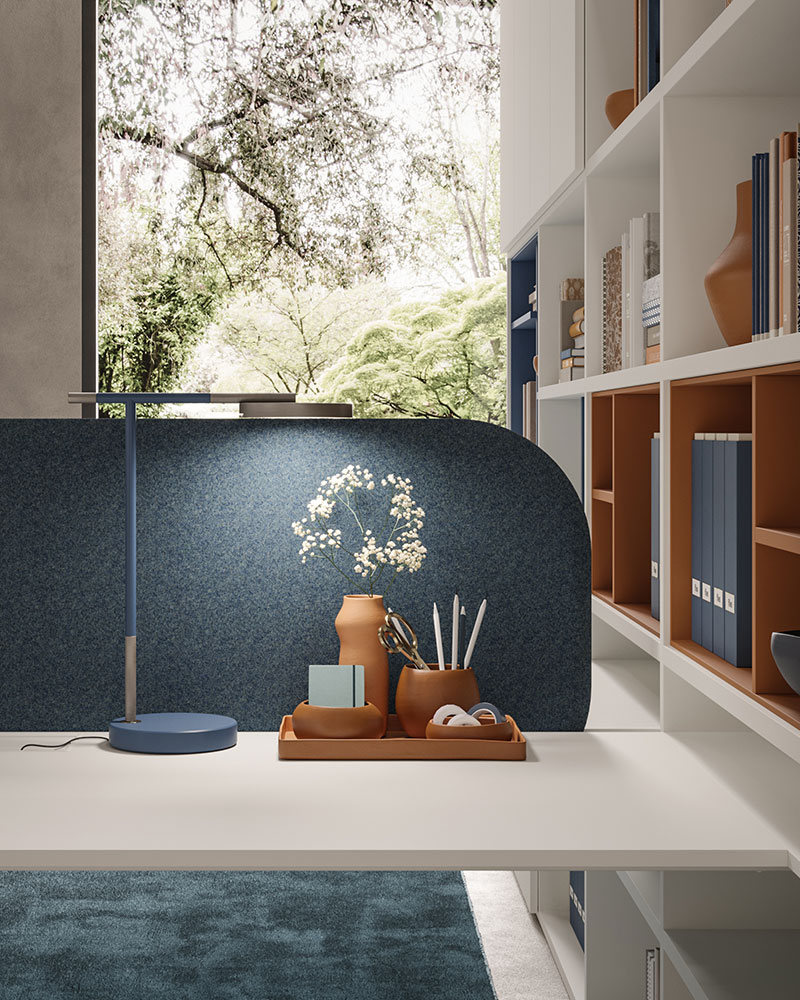
The design of the most advanced office interiors incorporates color science to modulate psychological reactions and improve performance. Numerous studies show how chosen hues influence stress levels, concentration, and creative flow. Designing with color, therefore means orienting cognitive energies based on the specific function of each area.
Shades of blue and relaxing neutrals, which promote calm and rational thought, are ideal for deep workspaces or environments requiring intense focus. Conversely, zones dedicated to brainstorming and collaboration benefit from warmer, more dynamic colors, such as accents of yellow or orange, recognized for stimulating interaction and optimism. Green, associated with natural elements, is particularly effective in break areas, where it contributes to reducing visual and mental fatigue.
Strategic color use is therefore a powerful design tool that creates balanced environments, actively supports well-being, and elevates the
work experience.

4. Visual order and smart storage
Visual clutter is a major obstacle to productivity. Loose cables, scattered documents, and misplaced accessories inevitably generate mental confusion and slow down workflow.
An efficient office requires organizational systems designed integrally with the architecture, rather than being added as mere afterthoughts.
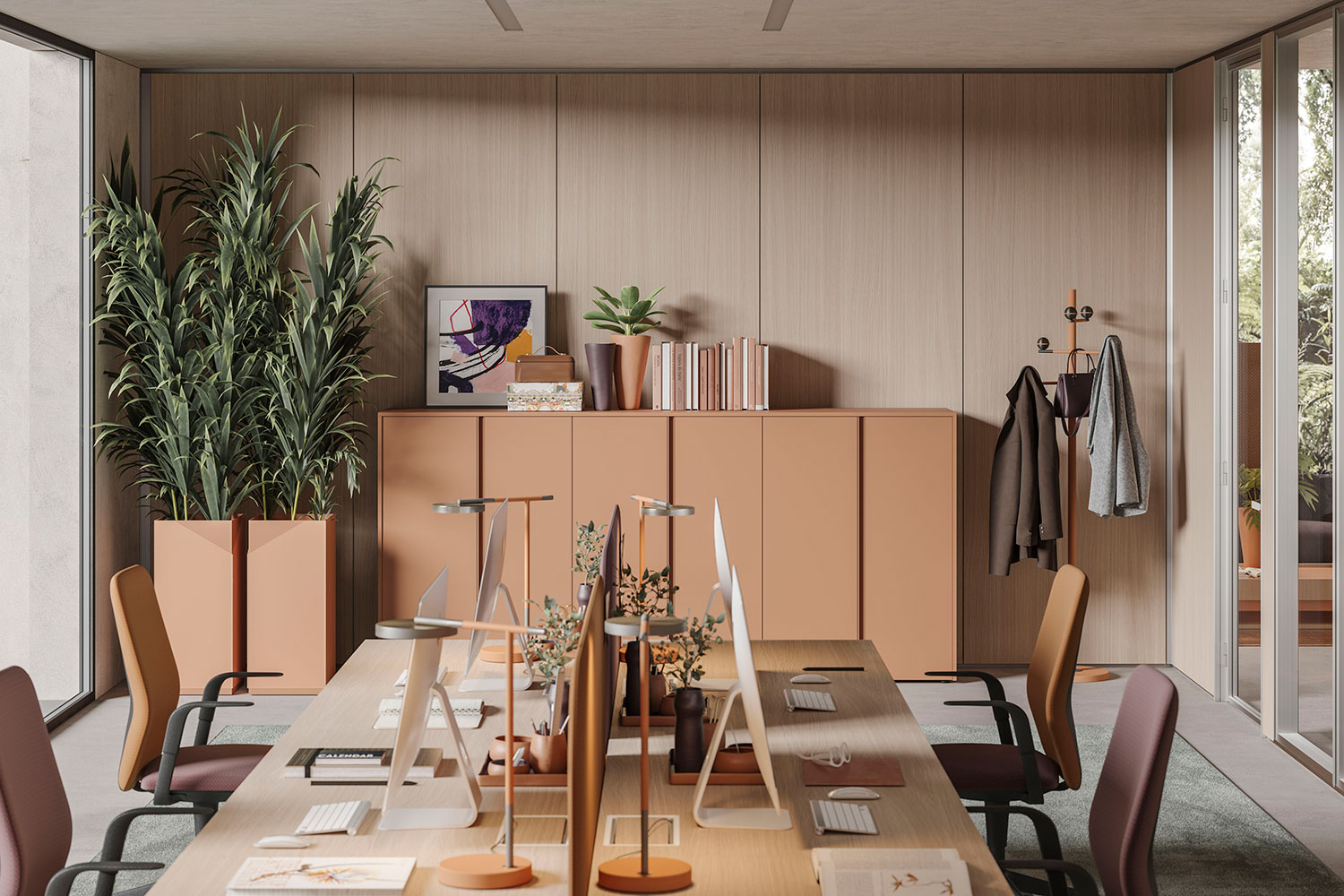
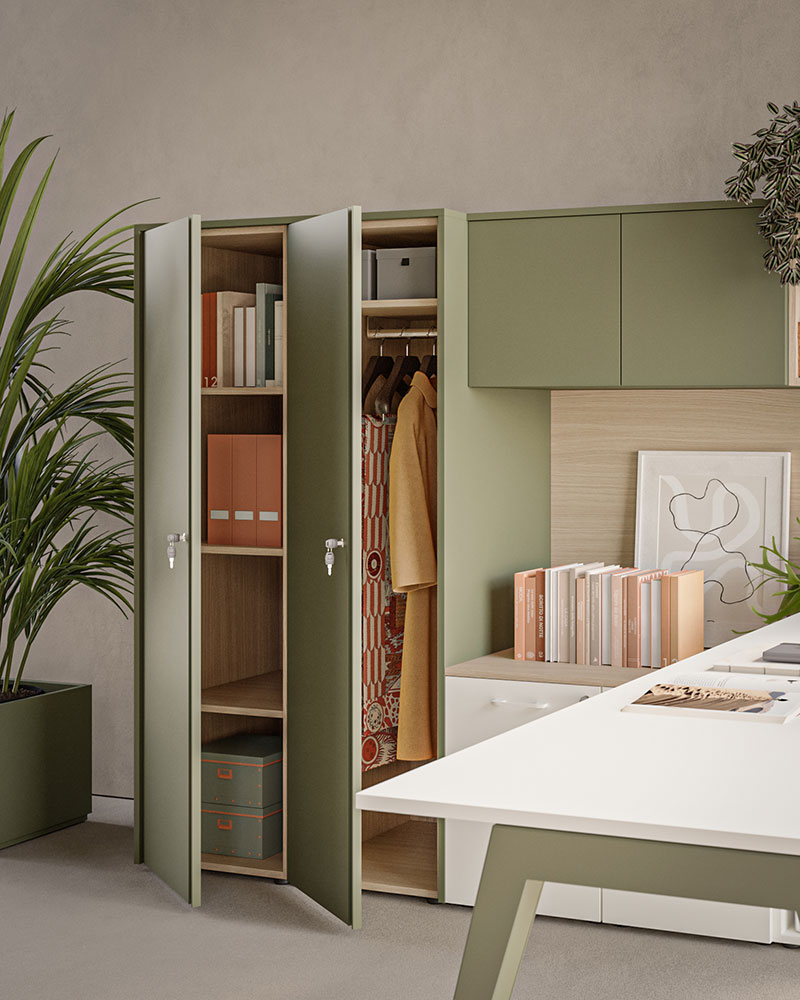
The Profbox system addresses this need directly. Its design features essential volumes, hinged doors, and extensive modularity, allowing for flexible configurations: wall-mounted, suspended, or freestanding center-room setups. Drawers, large baskets, open elements, and even planter boxes allow for customized compositions, balancing solids and voids. Furthermore, the variety of finishes allows the storage units to seamlessly integrate into the aesthetic identity of the space, enhancing order and functionality without sacrificing design.
5. Thoughtfully designed spaces
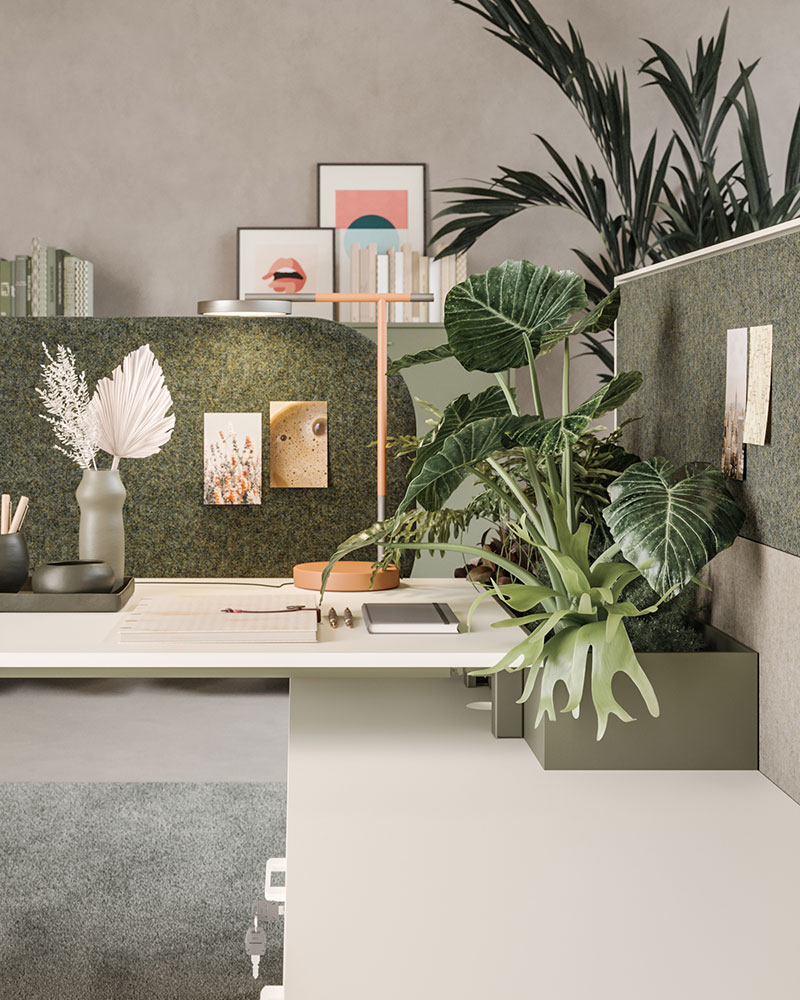
A carefully designed office goes beyond aesthetics: it supports people, encourages collaboration, and enhances everyday experience.
Color, order, ergonomics, and movement come together to create stimulating, harmonious, and comfortable environments. Areas for focused work and spaces for interaction allow employees to experience the office at its best, making it more pleasant, functional, and welcoming.
When designing office interiors, considering these elements ensures that the workspace truly serves the people who use it, balancing concentration, collaboration, and well-being to create a supportive and enjoyable environment.