
Choosing the right boardroom table for your office
Choosing the right boardroom table for your office
Factors to consider when picking a boardroom table
In a prestigious corporate context, the meeting room is the heart of decision-making and the primary business card for clients and partners. It is the platform where brand identity comes to life—the crucial focal point that welcomes, influences, and sets the tone.
Consequently, the boardroom table is not a simple piece of furniture, but a strategic asset that must perfectly balance aesthetics, functionality, and comfort. Today, the decision-making space requires solutions that go beyond traditional furniture, combining design excellence with the dynamism of contemporary offices.
You can no longer limit your considerations to dimensions alone: today, a boardroom table must guarantee optimal user experience. It must act as a catalyst for decisions, communicating stability and vision. Choosing the ideal model is a direct investment in the perceived value of the brand.
In this guide, we analyze some key factors that make a difference within a high-level meeting environment.
1. Customization and Bespoke
The distinction of a high-level professional environment often lies in going beyond standards.
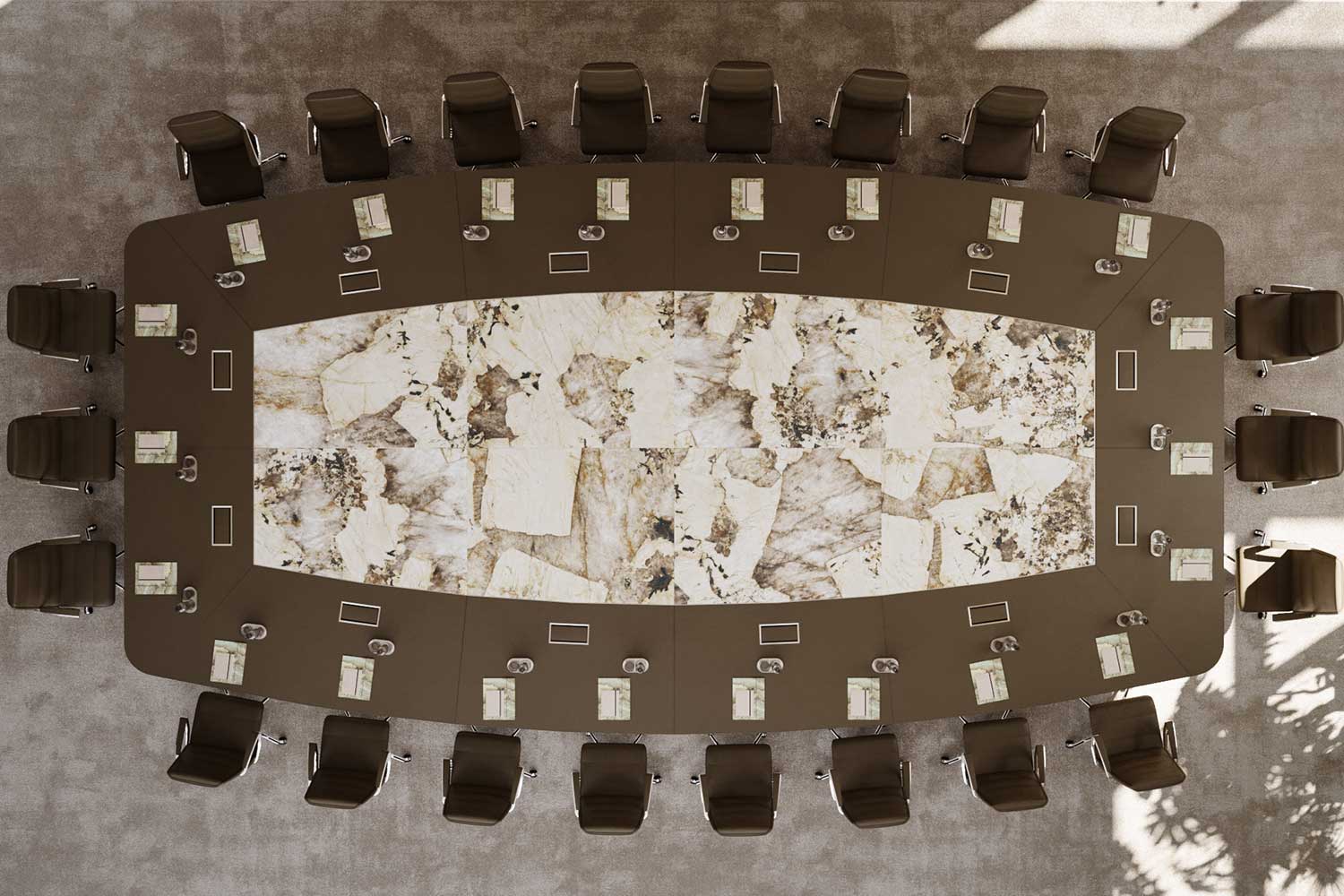
In contexts where the architecture of the room presents unique volumes or specific aesthetic needs, the real challenge lies in the ability to model the furniture according to the space, and not vice versa. This is where Prof’s production flexibility comes into play, allowing you to overcome the limits of mass production to create projects defined by the real needs of the client.
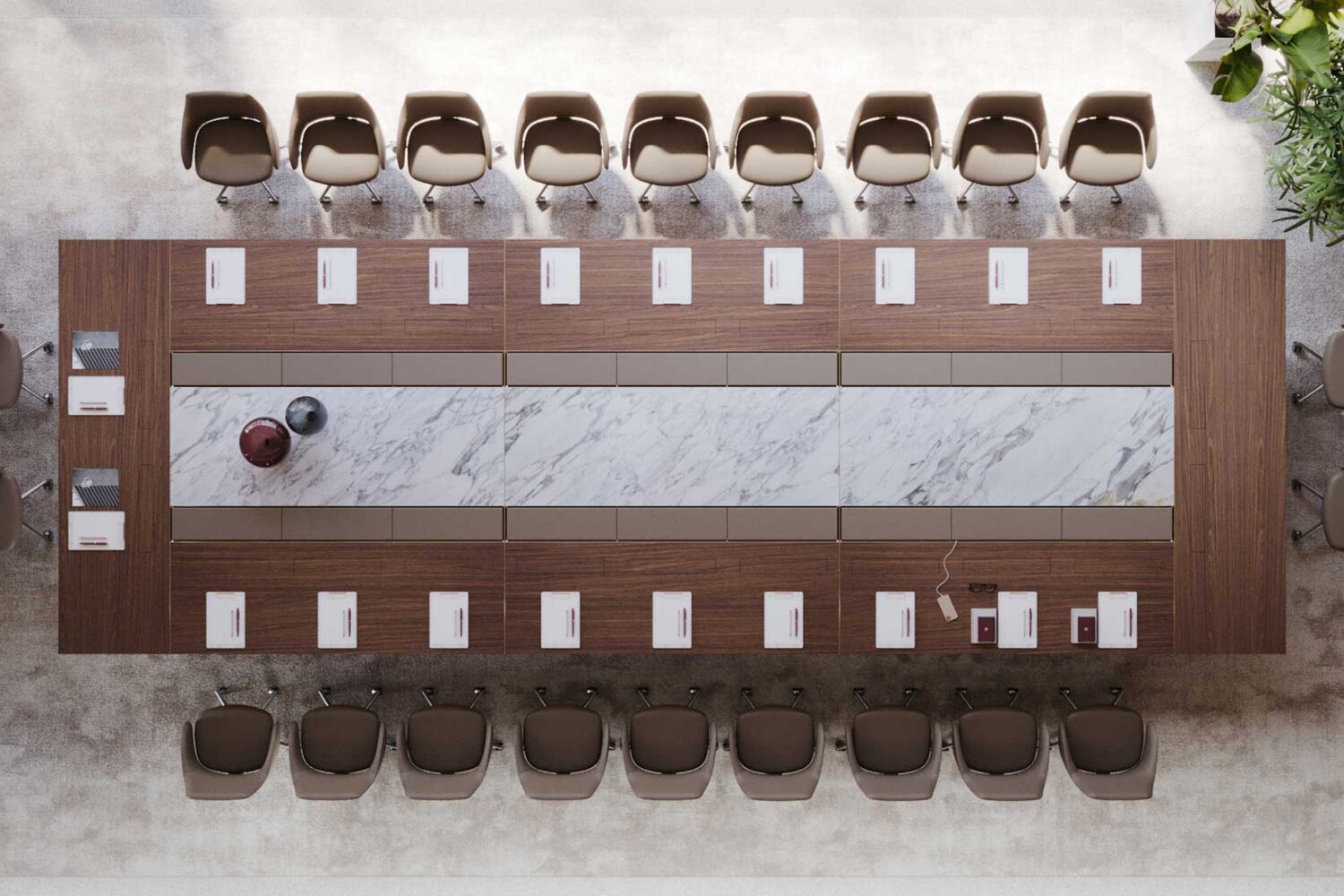
Through the Bespoke collection, the concept of the meeting room evolves into a tailored experience. This design philosophy allows you to define dimensions, shapes, and finishes in a unique way, ensuring that each meeting business table is a one-of-a-kind piece, perfectly integrated into the geometry and style of the conference room. Breaking free from the limitations of pre-configured proposals means transforming the table into an architectural element, capable of reflecting the exclusivity of the project.
2. Seating ergonomics
The comfort of participants is essential for the effectiveness of meetings.
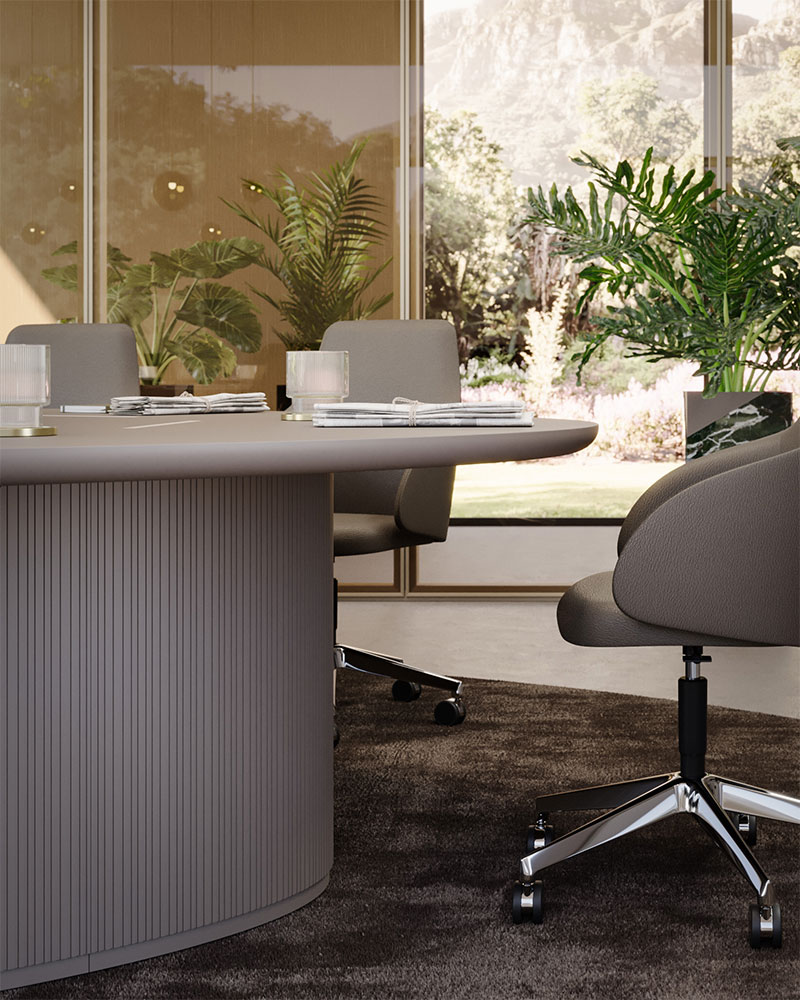
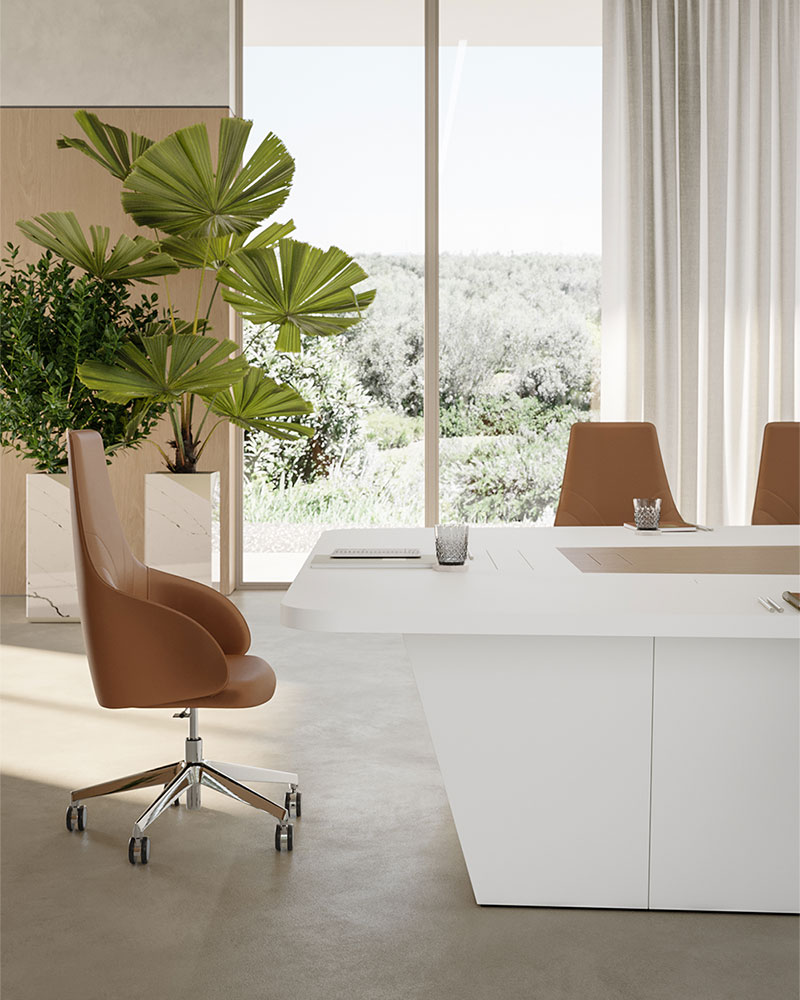
The table and seating must work in synergy: it is fundamental that the height of the surface (72-75 cm) allows armchairs to slide easily underneath, ensuring correct posture and an always and always organized space.
The choice of seating defines the tone of the meeting: swivel bases or wheels support dynamism and flexibility, while fixed or cantilever structures communicate stability and formal rigor.
Equally crucial is the management of space. Each participant requires approximately 60-70 cm of linear space to operate easily with laptops and documents.
In this context, the structure of the boardroom table plays a strategic role: sculptural central bases or pedestals are preferable to perimeter legs, as they eliminate any obstruction for the legs and facilitate access to the station, elevating the level of comfort especially during prolonged sessions.
3. Sensory aspects
The quality of luxury furniture is measured in the sensory experience it offers, shaped by the interaction between materials, light, and sound:
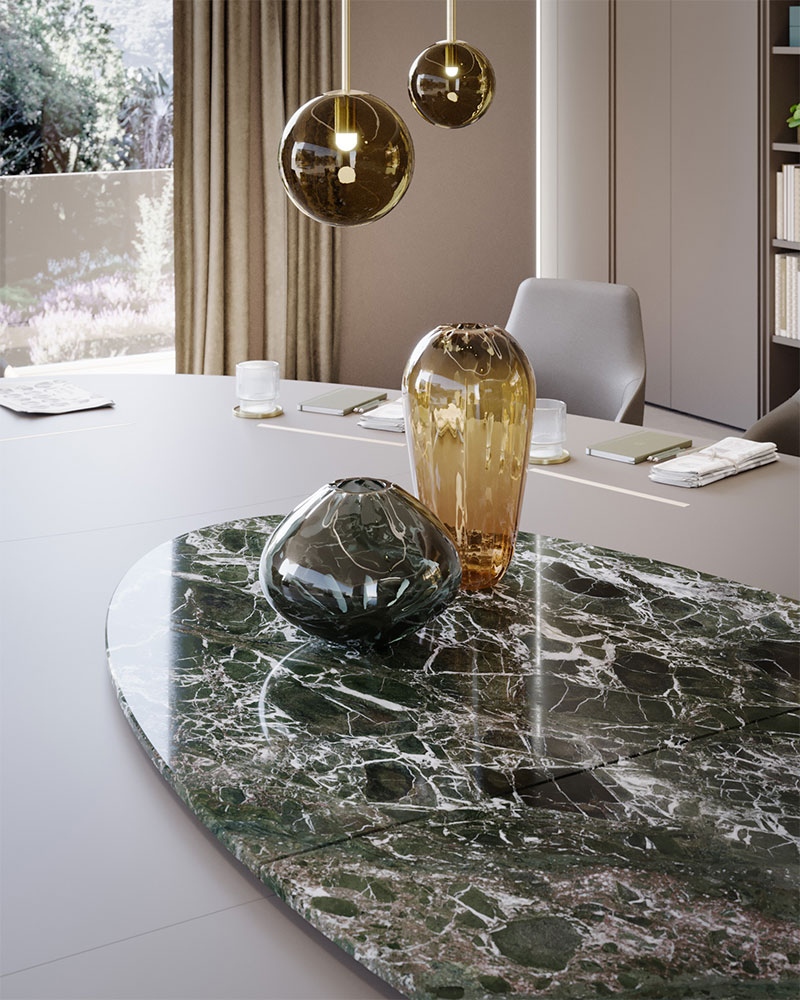
- Finishes and reflection: surfaces influence the atmosphere of the room. A sophisticated approach consists of playing with the alternation of glossy and matte finishes: for example, an anti-reflective matte top — essential for not straining the eyes with digital devices — can be paired with glossy inserts or bases, that add depth and prestige to the design.
- Lighting harmony: the table must dialogue with the lighting system. It is essential that light sources enhance the textures of the materials — whether it is the natural pattern of the wood, the depth of marble, or the transparency of glass — ensuring that the shape of the meeting business table is consistent with the arrangement of the layout of the luminaires.
- Acoustic and tactile control: large surfaces can generate unwanted echoes. The strategic use of wood or the integration of soft material details, such as leather inserts, contributes to improving the acoustic comfort of the room and offers a pleasant tactile sensation during the use of the surface.
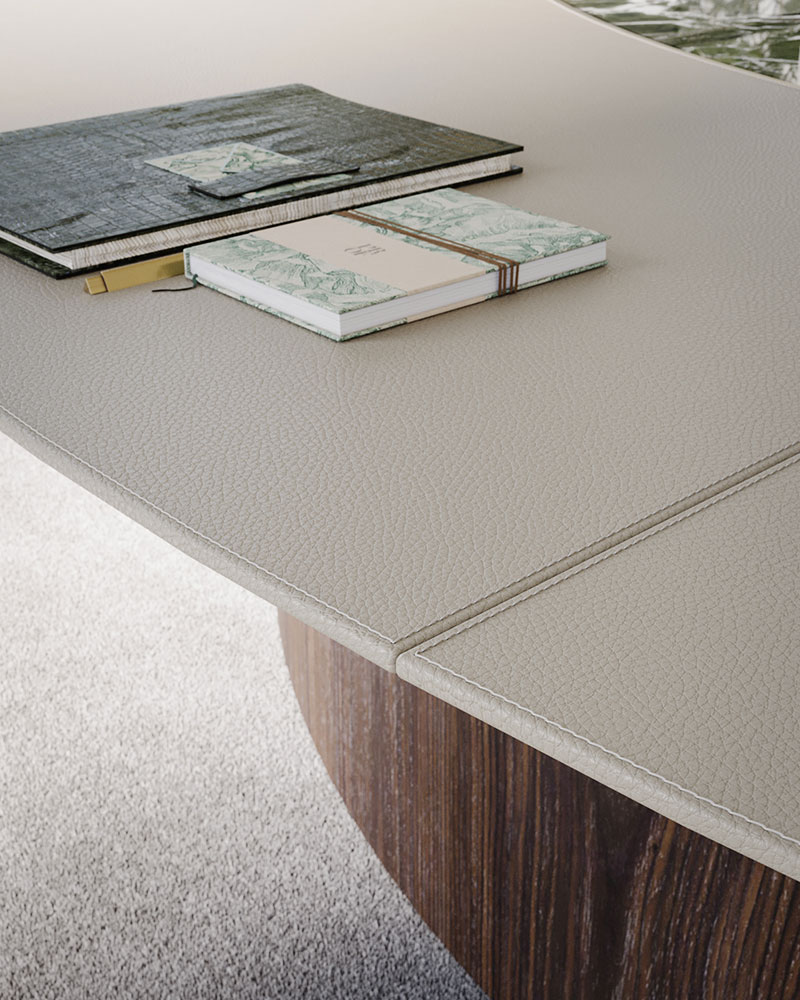
4. Craftsmanship, stability, and invisible design
Excellence in a directional table is given by the silent integration between craftsmanship and structural engineering. Stability must be absolute: high-resistance internal frames must support noble and heavy materials without the slightest oscillation, guaranteeing a feeling of immediate solidity to the touch.
But true luxury today lies in ‘invisible design’, or the ability to integrate technology seamlessly. Cluttered cables disrupt the harmony of the workspace. To solve this, a contemporary table manages power and data flow via hidden internal ducting and flush-mount pop-up accesses, ensuring connectivity is available only when needed and remains invisible otherwise.
5. Beyond function
The table you choose for the meeting room is not a silent object: it speaks of corporate reality before the meeting even begins. It tells a story of attention to detail, care for people’s well-being, and the solidity of a specific vision.
Investing in furniture that combines the art of manufacturing with functional intelligence, means giving a concrete form to leadership and brand identity.
Related products
Related news
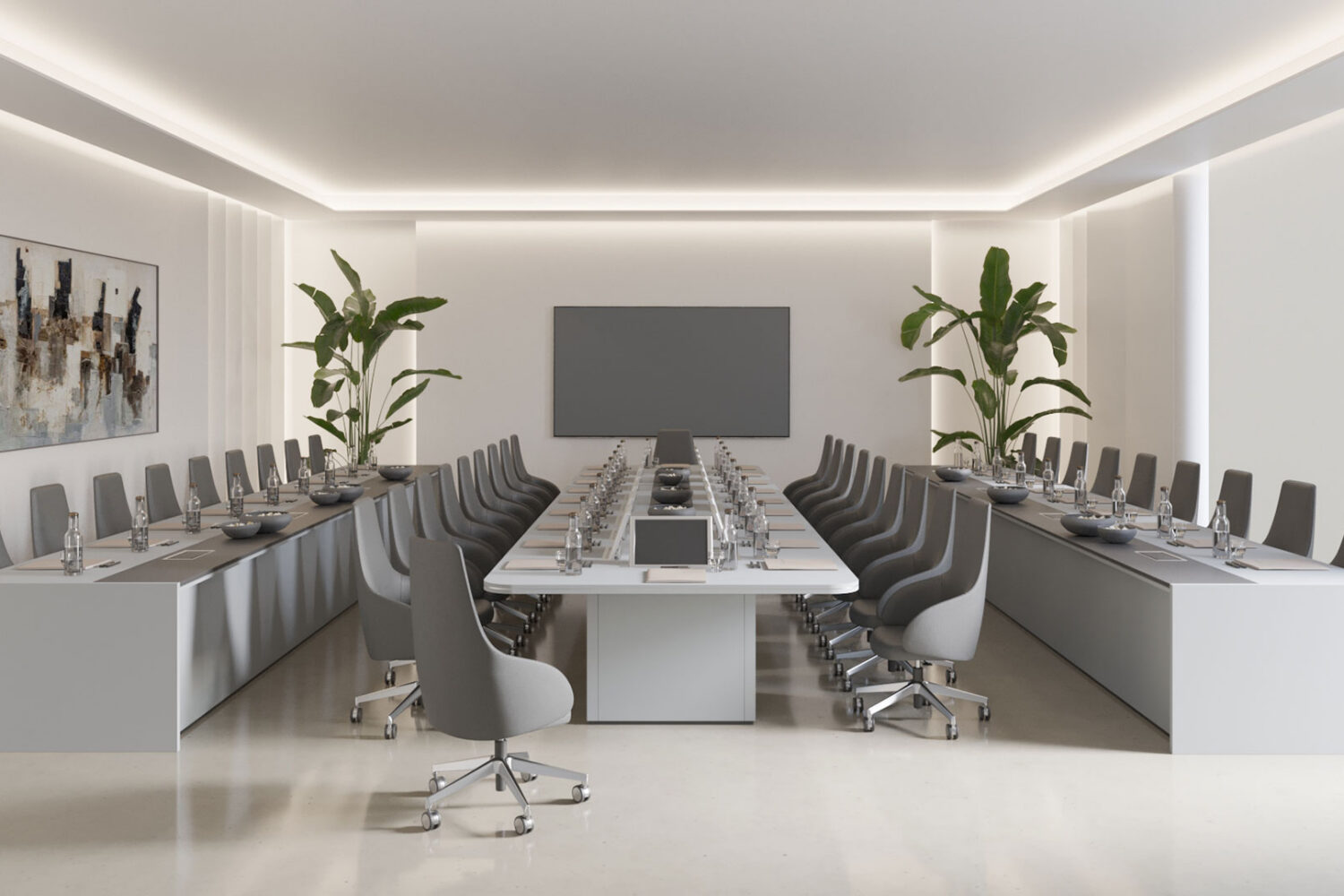
The ultimate guide to large conference tables: seating 20+ people in style
Exchange, dialogue and representation
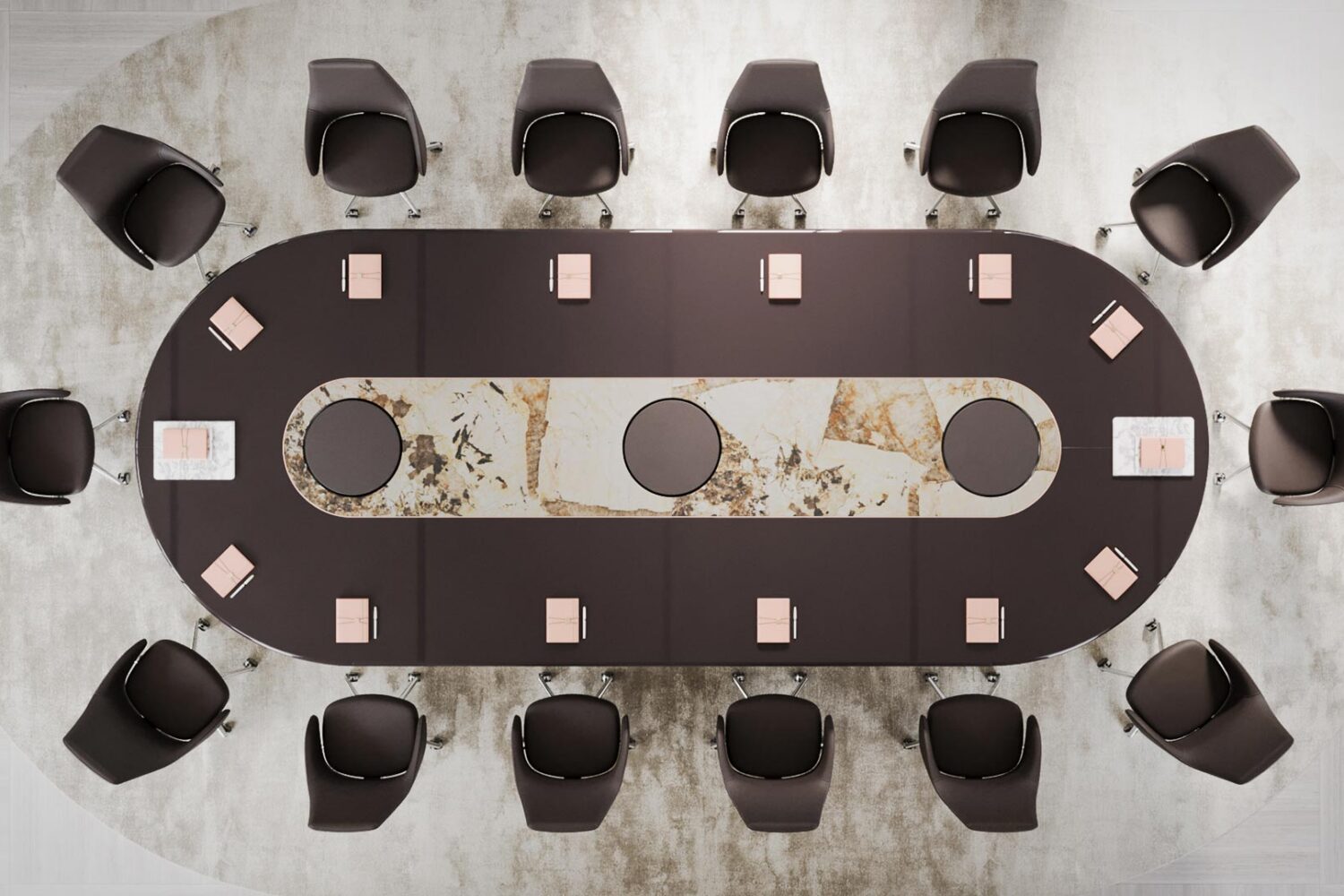
Statement conference table: why your boardroom needs a custom marble conference table
The company’s operational and symbolic hub
Material combinations: pairing marble, wood, and brass for a luxury finish
Colour consistency is what allows a space to breathe